What are sensory toys for newborns under 6 months?
Sensory toys for newborns under 6 months are simple, gentle toys designed to support early brain development by engaging a baby’s senses—touch, sight, sound, and movement—without overwhelming them.
During the first six months of life, babies don’t learn through instructions or “play rules.”
They learn by seeing, touching, hearing, and feeling the world around them. That’s why the right sensory toys matter so much at this stage.
Think of sensory toys as a gym for your newborn’s brain—not their muscles.
In the first six months, your baby is training their brain to focus, explore, and make sense of the world using their hands, eyes, and ears. Every new texture they touch helps build a new neural connection.
Babies under 6 months are like little scientists.
They don’t ask questions—they experiment. When your baby squeezes something soft or hears a gentle crinkle, they’re slowly learning how things work. This kind of play is what builds the foundation for problem-solving later on.
Sensory play isn’t just about entertainment.
When babies explore different textures, they’re strengthening the small muscles in their hands—skills they’ll need later to hold a spoon, a cup, and eventually a pencil.
When they look at shapes and high-contrast colors, they’re laying early groundwork for focus and visual tracking.
And just like adults feel calmer when touching cool water or something soft, babies do too.
The right sensory toys can help newborns regulate their bodies, release tension, and feel more settled—especially during those early, overwhelming months.
In one simple sentence:
Sensory toys are how newborns under 6 months learn how to think—because for babies, touching is thinking, and seeing is learning.
Our Top Sensory Toys for Newborns (0–6 Months)
We’ve carefully picked a selection of sensory toys that are perfect for newborns under 6 months—toys that are gentle, safe, and loved by parents.
These toys are designed to support early brain development, promote focus, and engage your baby’s senses—without overwhelming them.
Whether you’re looking for high-contrast toys, soft rattles, textured balls, or calming mirrors, this list highlights what really works for babies in their first six months and has been tested and approved by parents just like you.
Some links in this post are affiliate links, which means I may earn a small commission if you decide to buy—but it won’t cost you anything extra. Thanks for supporting the blog!
Soft Musical Play Gym for Newborns (0–6 Months)
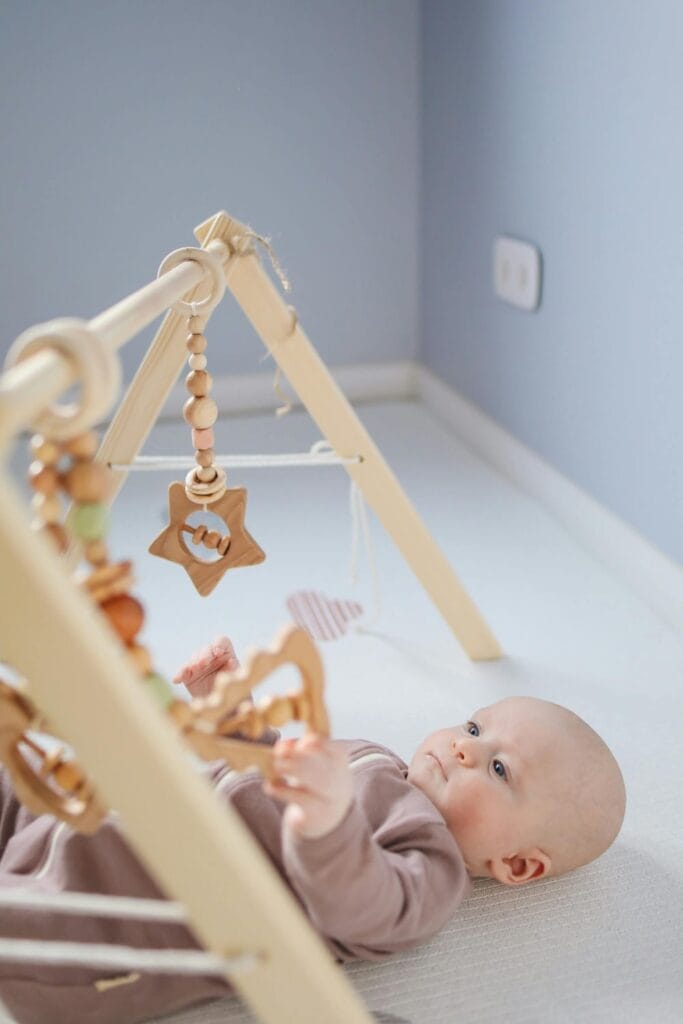
This type of sensory toy for newborns provides a complete multisensory experience that supports early development in the first months.
Why parents love it:
- Multisensory development: Babies can kick the piano keys (or similar instruments) to stimulate auditory skills, explore their reflection in a mirror for visual engagement, and reach for hanging toys with different textures to develop tactile skills.
- Cause-and-effect learning: When babies interact with the toys and produce sounds or movements, they begin to understand “action leads to result,” an essential early cognitive skill.
- Muscle strengthening and movement: Kicking, reaching, and pushing encourage tummy time and help strengthen arms and legs.
- Grows with your baby: Suitable from birth up to 6 months, with features that can be used longer as the baby develops.
👉 Check out our top pick: Fisher-Price Deluxe Kick & Play Piano Gym on Amazon
Soft Colorful Rattle & Sensory Teether for Newborns (0–6 Months)
This sensory toy for newborns combines visual, tactile, and fine motor development in a safe and engaging way.
Why parents love it:
- Easy to grasp: Lightweight and perfect for tiny hands learning coordination.
- Visual exploration: Bright, colorful loops encourage babies to track shapes and colors.
- Tactile and motor skills: Soft, safe teething material allows babies to grasp, squeeze, and explore textures while soothing their gums.
👉 Check out our top pick: Manhattan Toy Winkel Rattle & Sensory Teether on Amazon
Textured Developmental Bumpy Ball for Newborns (0–6 Months)
This sensory toy for newborns encourages tactile exploration and visual development in a safe, engaging way.
Why parents love it:
- Tactile exploration: Multiple textures (smooth, rough, striped, dotted) let babies explore different surfaces with their hands.
- Visual stimulation: High-contrast patterns help develop visual tracking.
- Auditory fun: Gentle crinkle sounds add a soft auditory experience.
- Easy to grasp: Lightweight and perfect for tiny hands learning coordination.
👉 Check out our top pick: Sassy Developmental Bumpy Ball on Amazon
- Multi-Piece Montessori Sensory Toy Set for Newborns (0–6 Months)
- This sensory toy set for newborns and infants includes multiple toys designed to support early sensory development, fine motor skills, and exploration from birth through the first year.
- Why parents love it:
- Variety of textures and shapes:
The set includes stacking cups, textured balls, and soft blocks that encourage hands-on tactile play. - Exploration and coordination:
Pull-string and spinner elements help babies reach, grasp, and learn early cause-and-effect. - Builds early skills gradually:
As your baby grows, they can explore new ways to play with the same set. - Recommended age:
- 0–6 months for sensory play
- With elements that can grow with your baby to 12 months and beyond
- Multi-piece Montessori sensory toy set (such as an Amazon 6-in-1 baby toy collection
For High-Needs Babies: Gentle Sensory Play Tips
For newborns and infants who are high-needs babies, choosing the right sensory toys requires extra care. Their senses are often very sensitive, and what might be fun for a typical baby could be overwhelming or frustrating for a high-needs infant.
What works best (focus on calming and regulation):
- Deep pressure: Gentle massages or using slightly heavier fabrics (like a soft cotton blanket) can help calm the nervous system.
- Rhythmic movement: Slow, consistent rocking or gentle swings provide soothing vestibular stimulation.
- Warm water play: Simple, calm water play without floating toys gives gentle, even pressure and is very calming.
- White noise or natural sounds: Instead of loud music, soft natural sounds or white noise can help them focus and reduce overstimulation.
- Dim lighting: When using high-contrast cards (black and white), keep the light soft to avoid overloading the eyes.
What to avoid ❌ (prevent sensory overload):
- Flashy lights or electronic toys with loud or sudden sounds
- Offering too many toys at once (stick to one sensory activity at a time)
- Sticky or uncomfortable textures if the baby has tactile sensitivities
- Playing in busy or noisy spaces
Golden rules for high-needs babies:
- Less is more: Keep sessions short (2 minutes to start) and gradually increase if the baby tolerates it.
- Watch for cues: If your baby turns away, rubs their eyes, or stiffens, stop immediately.
- Timing matters: Choose a calm, alert window (after feeding and waking) rather than when the baby is hungry or tired.
In short, high-needs infants need sensory toys that calm and comfort, rather than toys that overwhelm or overstimulate.
⭐ Best Choice for High-Needs Babies
Among all the sensory toys we mentioned above, clip-on sensory toys like the Lamaze Firefly stand out as one of the most suitable options for high-needs babies.
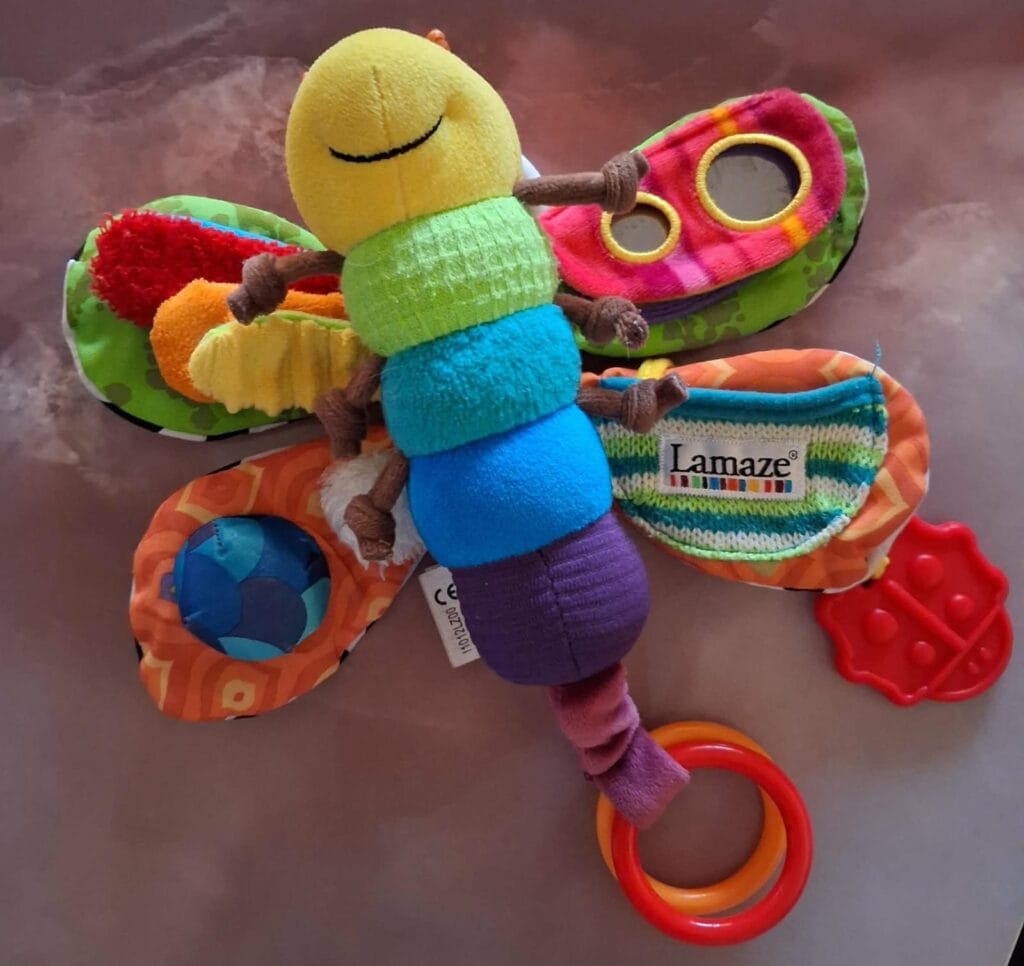
The reason is simple: this type of sensory toy is engaging without being overwhelming. It offers gentle textures, soft crinkle sounds, and calm visual elements—without flashing lights or loud, sudden noises that can easily overstimulate sensitive newborns.
For high-needs babies, sensory play should feel grounding and predictable, not exciting or chaotic. A clip-on toy like this allows babies to explore one sense at a time, at their own pace, which helps regulate their nervous system rather than overload it.
From my personal experience as a mom, this was actually my high-needs baby’s favorite sensory toy. My daughter stayed engaged with it for months, and it was one of the very few toys she truly enjoyed without getting fussy or overwhelmed. She never seemed to get bored of it—probably because it offers just enough variety (mirror, textures, gentle sounds) while still feeling safe and familiar.
This multi-piece Montessori set is also great for high-needs babies — each toy is gentle, calm, and easy to explore one at a time, helping sensitive newborns stay engaged without overstimulation.
👉 Check out our top picks:
Multi-piece Montessori sensory toy set (such as an Amazon 6-in-1 baby toy collection)
Every baby experiences the world differently—and that’s especially true for newborns in their first six months of life. When it comes to sensory toys for newborns, the goal isn’t to impress or entertain, but to support, soothe, and gently guide early development.
Whether your baby is easygoing or more sensitive and high-needs, choosing calm, age-appropriate sensory play can make a real difference in how they explore and respond to their world.
✨ Trust your baby’s cues.
✨ Start slow.
✨ And remember: less is often more.
If you’re looking for more gentle, real-life tips for newborns (0–6 months)—including sensory play, calming routines, and honest motherhood experiences—save this post or explore our other newborn guides designed with real moms in mind.
You’re doing better than you think 🤍
Quick FAQ: Sensory Toys for Newborns (0–6 Months)
Are sensory toys safe for newborns?
Yes, if they’re made for babies, non-toxic, and have no small parts. Always supervise play.
How many toys does a newborn need?
Just a few simple toys—one or two well-chosen options are enough.
Can sensory toys overstimulate a baby?
Yes. Loud sounds, flashing lights, or too many toys at once can overwhelm, especially for high-needs babies. Watch your baby’s cues—turning away, stiffening, or fussiness means it’s time to pause.
When is the best time for sensory play?
During calm, alert moments—after feeding and a diaper change. Short sessions (1–5 minutes) are ideal, and even shorter sessions may work best for high-needs infants.
What’s one sensory toy your baby actually loves—not just tolerates?
Is your baby uncomfortable from gas or reflux?
When babies seem fussy after feeding, many parents feel unsure what might help. This gentle cheat sheet summarizes simple techniques commonly tried by parents, along with research-aligned tips often recommended in pediatric guidance.
- Simple soothing techniques many moms try
- Helpful feeding and positioning reminders
- A quick reference guide for stressful moments