How to Understand Your Baby’s Needs: 9 Body Language Cues Every Parent Should Know
Q: How can I tell what my baby really needs when they can’t talk yet?
A: Your baby is communicating with you all the time—even if it’s not with words. From tiny kicks to rubbing their eyes, every gesture and movement is a signal. Understanding these 9 essential cues will help you respond quickly, reduce fussiness, and make daily parenting easier and more enjoyable!
Why This Matters:
Many new parents feel overwhelmed trying to decode their newborn’s needs. Learning these cues means fewer tears for both you and your baby, and a calmer, more confident start to parenthood.

1. Clenched Fists (Hungry or Bored)
What it means: A baby often clenches their fists when they are starting to feel hungry—an early hunger cue. It can also indicate boredom or the need for interaction.
Mom Tip: Don’t wait for crying. Offer food or engage with your baby to see if they need interaction.
Example: If your baby keeps clenching their fists while staring at you, it might be time for a quick feeding or a little tummy time to play.
2. Red Eyebrows (Overtired)

What it means: When a baby’s eyebrows turn red, it’s a subtle sign that they are overtired. This is before fussiness or crying begins.
Mom Tip: Start the sleep routine immediately and avoid stimulating activities.
Example: If your baby yawns and their eyebrows are flushed after a busy morning, it’s a good cue to dim the lights and prepare for a nap.
Tip for High-Needs Babies: Babies who show this sign more intensely or more often may be high-needs babies, requiring extra comfort and shorter awake windows.
3. Staring into Space (Needs a Break)

What it means: If your baby stares blankly, they might be overstimulated and need a calm break. Their nervous system is overwhelmed by too much sensory input.
Mom Tip: Move your baby to a quiet spot, lower the lights, and offer gentle rocking or cuddling.
Example: During a loud playdate, your baby suddenly stops interacting and gazes into the corner—take them to a quieter room for a short break.
4. Pulling Ears (Tired or Teething)
What it means: Pulling ears can indicate teething discomfort or tiredness, depending on context. If accompanied by fussing or biting, it’s likely teething.
Mom Tip: Observe the context to understand whether your baby is teething or just tired, and respond accordingly with comfort or nap time.
Example: If your baby pulls their ears right after feeding and starts gnawing on their fingers, teething might be the cause. If it happens near nap time, it could just be tiredness.
5. Feeling Sleepy (Rubbing Eyes)
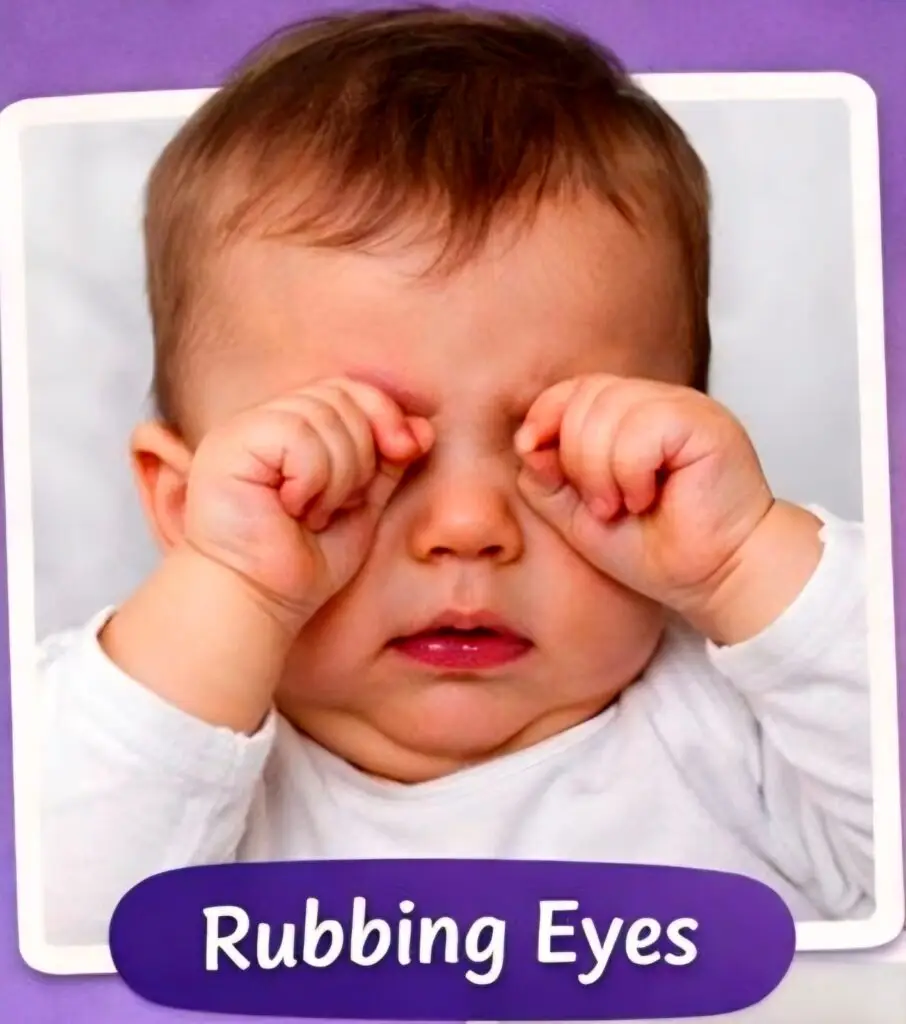
What it means: Rubbing eyes is a classic sign your baby is ready for sleep. The “sleep window” is open—act fast before fussiness sets in.
Mom Tip: Begin your bedtime routine or nap preparation immediately.
Example: After a morning walk, your baby starts rubbing their eyes—time to transition them into their crib or a quiet nap spot.
6. Looking for Food (Turning Head)
What it means: Known as the Rooting Reflex, babies turn their head and open their mouth looking for a nipple or bottle.
Mom Tip: Gently touch the cheek to guide them toward feeding when they show this reflex.
Example: While holding your baby, you notice them turning their head and sucking on the air—pick them up and offer the breast or bottle.
7. Frowning (Tired or Uncomfortable)
What it means: A frown may indicate discomfort from a wet diaper, tight clothing, or temperature issues.
Mom Tip: Check diaper, clothing, and room temperature to make your baby comfortable.
Example: Your baby frowns and squirm during diaper change time—maybe their diaper is wet or clothing is too tight.
8. Legs Kicking Fast (Excited or Overstimulated)

What it means: Rapid leg movements can signal excitement, but if paired with fussiness, it may indicate gas or discomfort.
Mom Tip: Observe facial expressions and context to determine the cause and respond with soothing techniques.
Example: During tummy time, your baby kicks their legs quickly with a big smile—this is excitement. But if kicking comes with grimacing, try gentle belly massage.
9. Overstimulation or Gas (Squirming/Arching Back)

What it means: Arching the back is a strong signal of discomfort, often due to gas, reflux, or overstimulation.
Mom Tip: Try gentle tummy time, burping, or a small belly massage to relieve discomfort.
Example: After a loud play session, your baby arches their back and fusses—this is a cue to calm them with gentle rocking or burping.
Tip for High-Needs Babies: This signal can appear more frequently or intensely in high-needs babies, making extra comfort and observation especially important.
By noticing these 9 cues, you’ll quickly become more confident in understanding your baby’s needs. Every gesture is a chance to bond and respond before fussiness escalates.
Have you noticed any of these signals today? Share your experiences in the comments below!💜
Is your baby uncomfortable from gas or reflux?
When babies seem fussy after feeding, many parents feel unsure what might help. This gentle cheat sheet summarizes simple techniques commonly tried by parents, along with research-aligned tips often recommended in pediatric guidance.
- Simple soothing techniques many moms try
- Helpful feeding and positioning reminders
- A quick reference guide for stressful moments